







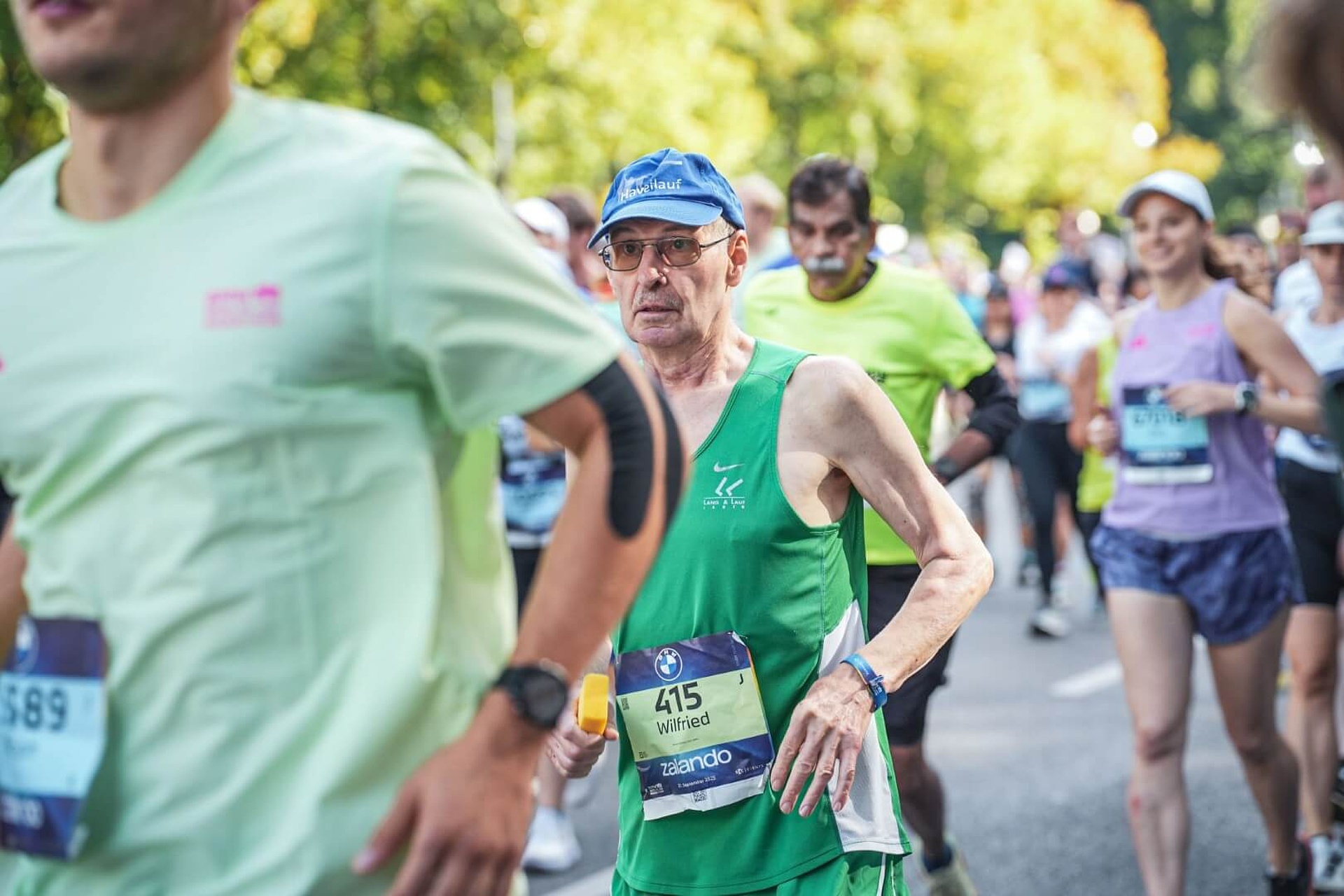
50 Times at the Starting Line: Wilfried Köhnke and Five Decades of the BMW BERLIN-MARATHON
How did you actually get into running back then?
Wilfried Köhnke: “The Little Olympic Book from 1964 was what inspired me to start. I bought it as a schoolboy. A year later, when I was attending a commercial school, I thought to myself: You sit at school for six hours and then do your homework – you need to get some exercise. So I bought a pair of running shoes and a pair of sports shorts. Then I started training where we lived. From 1966 onwards, I was a member of TuS Wesseling (Rhineland). In 1969, I moved to Berlin and trained with BSV Rehberge. Later, I joined BFC Preußen in Lankwitz, where I stayed for eleven years. I have been with the police sports club since 1988.”
At the time, you set yourself the goal of running a marathon on all five continents. Is there a marathon you would like to run again, simply to experience it one more time?
Wilfried Köhnke: “The marathon in Shellharbour. I ran it in 2022 and would love to experience it again because it is not far from my sister’s home, and it was also my 100th marathon. On top of that, the marathon took place on 1 May, which would have been the birthday of my uncle, who was killed in the war. That is why it was a particularly special marathon for me.”
What does it mean to you to now be standing at the starting line of the BMW BERLIN-MARATHON for the 50th time?
Wilfried Köhnke: “Of course, I never expected that at the beginning. At some point, the idea did occur to me: Maybe you’ll make it to 50. In 2012, I broke Bernd Hübner’s record of 36 participations. Martin W. Teague, who already took part in the very first people’s marathon, is also running again this year. Both of them motivated me to stay involved for such a long time as well.”
Why have you remained loyal to Berlin for so many years? What has kept drawing you back here?
Wilfried Köhnke: “I have lived in Berlin since 1969. So it was an obvious choice for me to take part in the BMW BERLIN-MARATHON. In the 1970s, 1980s and 1990s, I also ran in other Berlin marathons, but the home marathon was always something special.”
You have experienced Berlin over many decades. When you compare the years, how do you think the BMW BERLIN-MARATHON has changed?
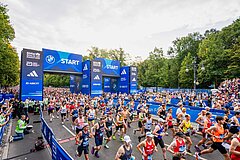
Wilfried Köhnke: “The marathon has obviously changed a lot. The first six races were still held along the Avus, with no more than 600 participants. From 1974 to 1980, Horst Milde got something great moving with the people’s marathons, followed by the city marathons from 1981 onwards. From 1981, there was the city course. Of course, it was wonderful to run through the city with so many spectators. The disadvantage, however, is that when you have more participants and 50,000 people are out on the course today, it is no longer the same kind of competitive race that it once was. Nevertheless, if I am going to train for a marathon, I would still rather run it as a race.”
What, in your view, makes Berlin a special marathon city?
Wilfried Köhnke: “It is a fast course, and it is fun to run alongside so many runners from abroad.”
You have now run more than 100 marathons. What was one of the most beautiful or perhaps most emotional moments for you personally?
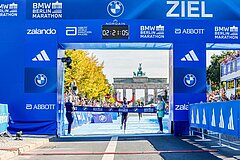
Wilfried Köhnke: “There are, of course, several. You still remember your first one. My first marathon started at the Mommsen Stadium. We had to run 300 metres inside the stadium, through the narrow marathon gate. And then you do something silly and run far too fast over those 300 metres because you want to get through the gate as quickly as possible. Of course, that is nonsense because you still have more than 42 kilometres ahead of you. But that was one moment I remember. Then, in 1984, there was a marathon with absolutely torrential rain. And during my personal best in 1985, I suddenly realised at some point during the race: Oh, you’re running a personal best. At that point, you have a huge amount of adrenaline in your body, and it really becomes easier to make it all the way to the finish. The finish on Kurfürstendamm was always special too, at the level of the Wertheim department store, which is now called Galeria. I actually found finishing along Kurfürstendamm one of the most beautiful experiences. And abroad, the marathon in Shellharbour in 2022 was, of course, something special. That is another one you remember fondly.”
You ran your personal best of 2:44 hours in 1985. How has the amount of training you do changed over the years?
Wilfried Köhnke: “During one period of marathon preparation, I ran 68 kilometres a week. But as you get older, you naturally run a little less. Today, I average 43 kilometres per week.”
And finally: What advice would you give to anyone who is currently thinking about running their first BMW BERLIN-MARATHON?
Wilfried Köhnke: “You should have a sports medical check-up to make sure you are fit to run a marathon. And then it would certainly be advisable to train for it with a running group or a club. I think you need a whole year to prepare for it. That certainly makes things a little easier. And during the marathon itself, when you start having problems, as you inevitably will, you should try not to walk, but at least keep moving with small, shuffling steps. Because the pain will pass. But the pride of having accomplished it will stay with you.”
Conclusion: 50 Times in Berlin and the Passion Remains
50 times at the starting line of the BMW BERLIN-MARATHON – a number that represents, above all, countless kilometres, memories and personal stories. Wilfried Köhnke has accompanied the BERLIN-MARATHON over several decades and experienced how the course, the city and the event have changed, without ever losing his own passion for running.
We would like to thank Wilfried Köhnke for his time, his personal insights and the stories from more than five decades of marathon running. And, of course, we wish him lots of joy and success for his 50th BMW BERLIN-MARATHON – and, above all, many more years of enjoying running.