









BMW BERLIN-MARATHON 2026: Exciting Races Expected on Sunday
- Course record under threat
- Handbike and wheelchair athlete
- Swings targets his tenth victory
- Panel: FUTURE OF WOMEN* WHO RUN
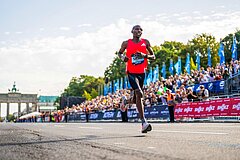
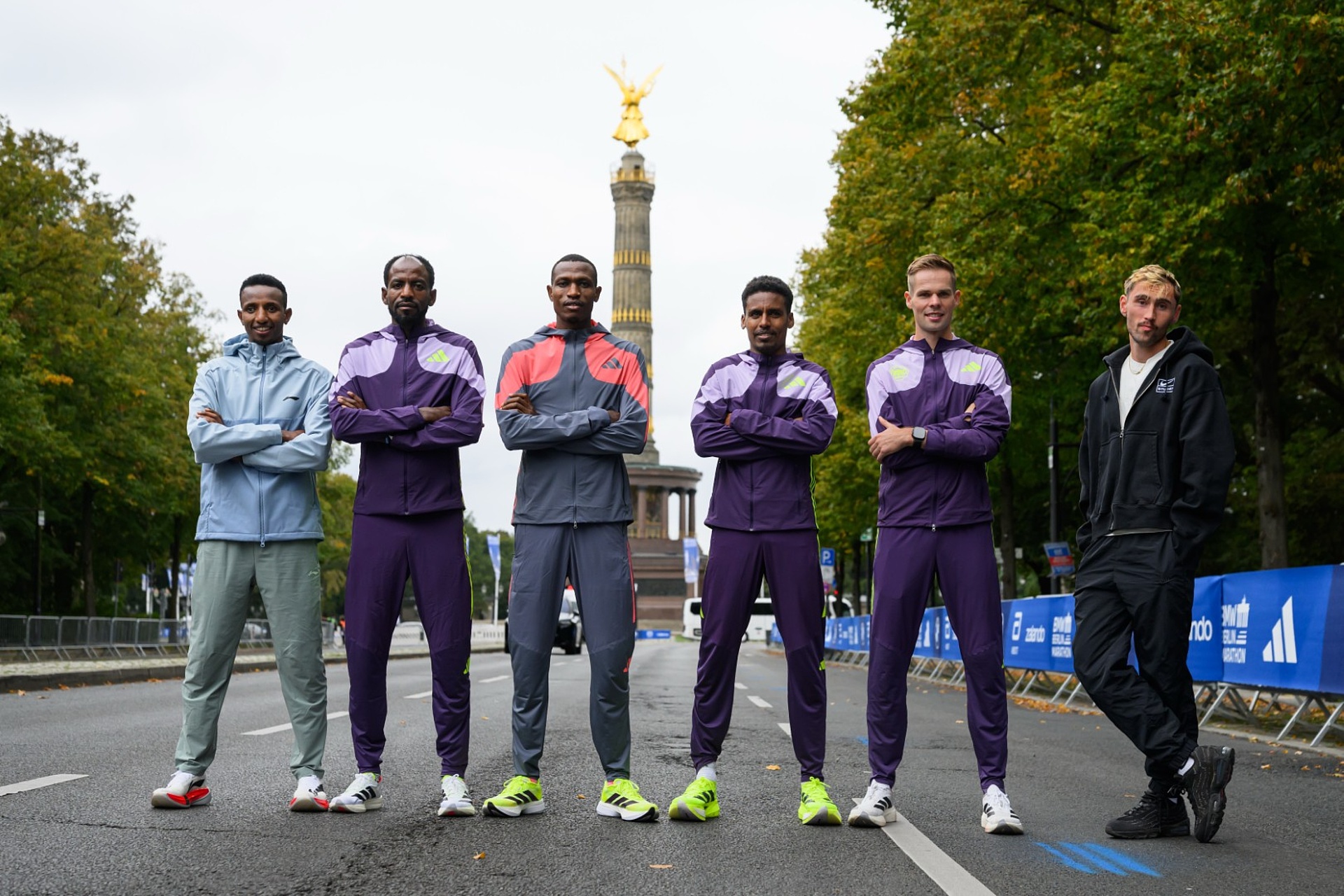
Open and tight races are expected at the BMW BERLIN-MARATHON on Sunday. After the withdrawal of injured world record holder Sabastian Sawe, who will be in Berlin as a guest of honour, at least half a dozen of athletes look capable of winning Germany’s most spectacular road race. Without Sawe there will obviously be no attempt to break the two hour barrier, however a very fast race is still likely. The course record of Eliud Kipchoge is a target. Kenya’s superstar won the BMW BERLIN-MARATHON in 2022 with a world record of 2:01:09.
Over 56,000 entries from 162 nations
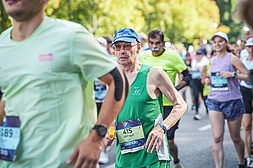
Five athletes on the start list have strong personal bests of under 2:05:00. “I expect a thrilling race and we have hopes for a course record. The pace for the first group will be towards 2:01,“ said Race Director Mark Milde. Once again the depth of Berlin’s elite field is very strong as well. A total of 26 runners have already clocked times of under 2:08:00 – a time that was still considered world-class some 25 years ago and was only beaten for the first time in Berlin in 1995. Three German are on the start list with PBs between 2:07:00 and 2:09:00 - Sebastian Hendel, Haftom Welday and newcomer Aaron Bienenfeld. Organisers of the BMW BERLIN-MARATHON registered over 56,000 entries from 162 nations for the classic distance.
Gabriel Geay - the fastest runner on the start list
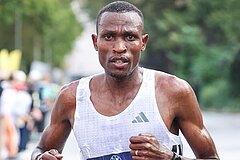
The fastest runner on the start list is now Gabriel Geay. With a time of 2:03:00 he holds the Tanzanian national record and ranks 17th on the list of the fastest runners of all time. “I am glad that I have a second chance to run in Berlin,” said the 29-year-old, who like a number of other athletes had to withdraw from the race a year ago due to the high temperatures. “I am in good shape and hope to run a very good time.”
Guye Adola is back in Berlin
A group of Ethiopian runners are among the favourites. Guye Adola is an athlete who set his outstanding personal best in Berlin and has also won the race before. In 2017 Adola finished second behind Kenya’s superstar Eliud Kipchoge. On that occasion he ran an unofficial world debut record of 2:03:46 which remains his personal best. In 2021 Guye Adola was Berlin’s winner. Among others he left Ethiopian superstar Kenenisa Bekele, who will not be able to run in Berlin on Sunday due to an injury, behind him. “I am very well prepared and in the best shape of my life,” said 35 year-old Adola, who won the Rotterdam Marathon this spring and came close to his PB with 2:03:54. Among his training partners in Addis Ababa is Yomif Kejelcha, who caused a sensation in London when he was runner-up in 1:59:41 and who recently broke the half-marathon world record. “During our training runs, I was only a little behind Yomif,” said Guye Adola.
Selemon Barega will run his third marathon
Selemon Barega could produce a big personal best in Berlin. The 10,000 m Olympic Champion from Tokyo 2021 will run his third marathon on Sunday. So far his PB stands at 2:05:00. “I’ve trained well and want to improve further in Berlin,” said the 26 year-old. Two of his Ethiopian compatriots are also among the favourites: Getaneh Molla and Shura Kitata have impressive personal bests of 2:03:34 and 2:03:59 respectively. No fewer than eleven Japanese runners with personal records ranging from around 2:06 to 2:08 feature on the final start list. It is expected that some of the group will attempt to challenge the Japanese record of 2:04:55.
The German athletes
The depth in this time range could benefit a trio of German elite runners. Sebastian Hendel surprised in Berlin two years ago when he clocked his PB of 2:07:33. Since then however he has been repeatedly hampered by health issues and injuries. “I am not yet in the sort of shape needed for a personal best; I’d be happy with a time of 2:09 or 2:08,” said Sebastian Hendel. Haftom Welday has already shown promising form this year, improving his time to 2:08:13 in Barcelona in March. “I’m fit and my aim is to beat my personal best,” said the 36-year-old, who has been training in Ethiopia. Aaron Bienenfeld ran a brilliant debut in Hamburg at the end of April with 2:08:47 - the fastest debut time ever by a German. Now he wants to improve further and break into the 2:06 to 2:08 range. “I have trained better than before Hamburg, everything was a bit more professional,” said Aaron Bienenfeld, who is coached by John Green in Flagstaff (USA).
Marcel Hug aims to extend winning streak
Anything other than another victory for Marcel Hug in the wheelchair race would be a major surprise at the BMW BERLIN-MARATHON. The Swiss has won the traditional Berlin race ten times, including the last six editions in a row. “I am very motivated after a slightly longer break. The Berlin course is flat and fast, and maybe I can produce another top time,” said Hug. One of his challengers will be Jetze Plat. The Dutchman, who switched from handbiking to wheelchair racing and finished third in the wheelchair race at the BMW BERLIN-MARATHON last year, said: “I wanted a new challenge, so I switched to wheelchair racing. I will try to follow Marcel on Sunday, but that won’t be easy.”
Schär and Debrunner among the favourites in the women’s wheelchair category
Among the women’s starters are two wheelchair athletes who have dominated the BMW BERLIN-MARATHON in recent years. Defending champion Manuela Schär will be back on the start line. “My second half of the season has gone well so far, and Berlin is almost like a home race for me, so I am really looking forward to it,” said Schär. Her compatriot Catherine Debrunner won the BMW BERLIN-MARATHON three years in a row from 2022 to 2024. “I am very well prepared and hope to have a good race, but the competition is strong,” said Catherine Debrunner.
Bart Swings targets tenth victory in Berlin
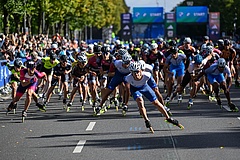
For Belgian skater Bart Swings, Saturday’s BMW BERLIN-MARATHON Inline Skating has a very special goal in store: he is aiming to celebrate his tenth victory in Berlin. “I’m very happy to be back here. Last year, I was unable to compete due to injury. Now my goal is to win for the tenth time. The BMW BERLIN-MARATHON is one of the biggest races in the world and for me it almost feels like a World Championship.” Swings also holds the course record of 56:49 minutes. Should the opportunity arise, he will attempt to challenge his own record. The Belgian is also planning to make early breakaway moves – a tactic that has already brought him success in Berlin on several occasions. Around 2,000 skaters will line up at the start tomorrow, once again bringing together international elite athletes and the broad spectrum of the inline skating community.
FUTURE OF WOMEN* WHO RUN – Panel brings together strong voices
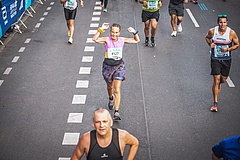
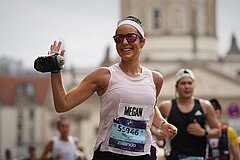
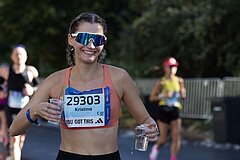
The proportion of women taking part in the BMW BERLIN-MARATHON continues to grow: 36.2 percent of Sunday’s participants are women, while among those aged 26 to 30 the figure has already reached 40.2 percent. How can a positive future be shaped for women* in running? This was the focus of yesterday’s “FUTURE OF WOMEN* WHO RUN” panel. Representatives from recreational and elite sport, the media and business discussed visibility, equal opportunities and better conditions for women in running.
Initiative by SCC EVENTS and Tagesspiegel
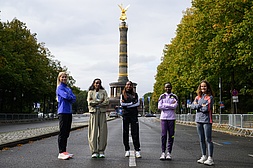
Among those taking part were Rosemary Wanjiru, winner of the 2025 BMW BERLIN-MARATHON, Esther Pfeiffer, Jennifer Thomas from adidas, Anna Hankings-Evans, founder of Black Women Run, and Gladys Cherono, a three-time winner of the BMW BERLIN-MARATHON. Alongside many positive developments, the discussion highlighted that women’s safety remains an important issue. With “WOMEN WHO RUN in the Dark”, SCC EVENTS and Tagesspiegel have created a running programme for women during the darker months of the year, which is set to continue next winter. There is also a continued need for more research into women-specific needs in areas such as training science, race nutrition and medical issues. In both elite and recreational sport, female role models and safe spaces are also important, providing girls and women with opportunities to gain their own experience and discover their potential.